

















Wat Street
At Wat Street, we set out to forecast changes in market regimes: periods where the market behaves differently enough that you might want to use a different trading strategy.
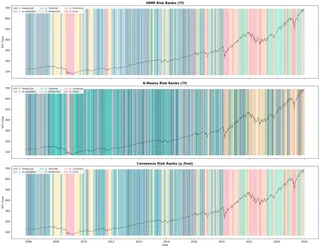
First, we needed labeled data for forecasting, so we had to decide what counted as a regime. I worked on k-means clustering and compared it with the team's Gaussian HMM results. I also tried expanding from seven features to 48. The 48-feature version was pretty bad. It grouped almost all of 2012 through 2018 into one regime.
We combined the two methods into a consensus dataset with six risk ranks, from Steady Bull to Crisis. When they disagreed, we chose the riskier label. We called this the pessimistic pivot.
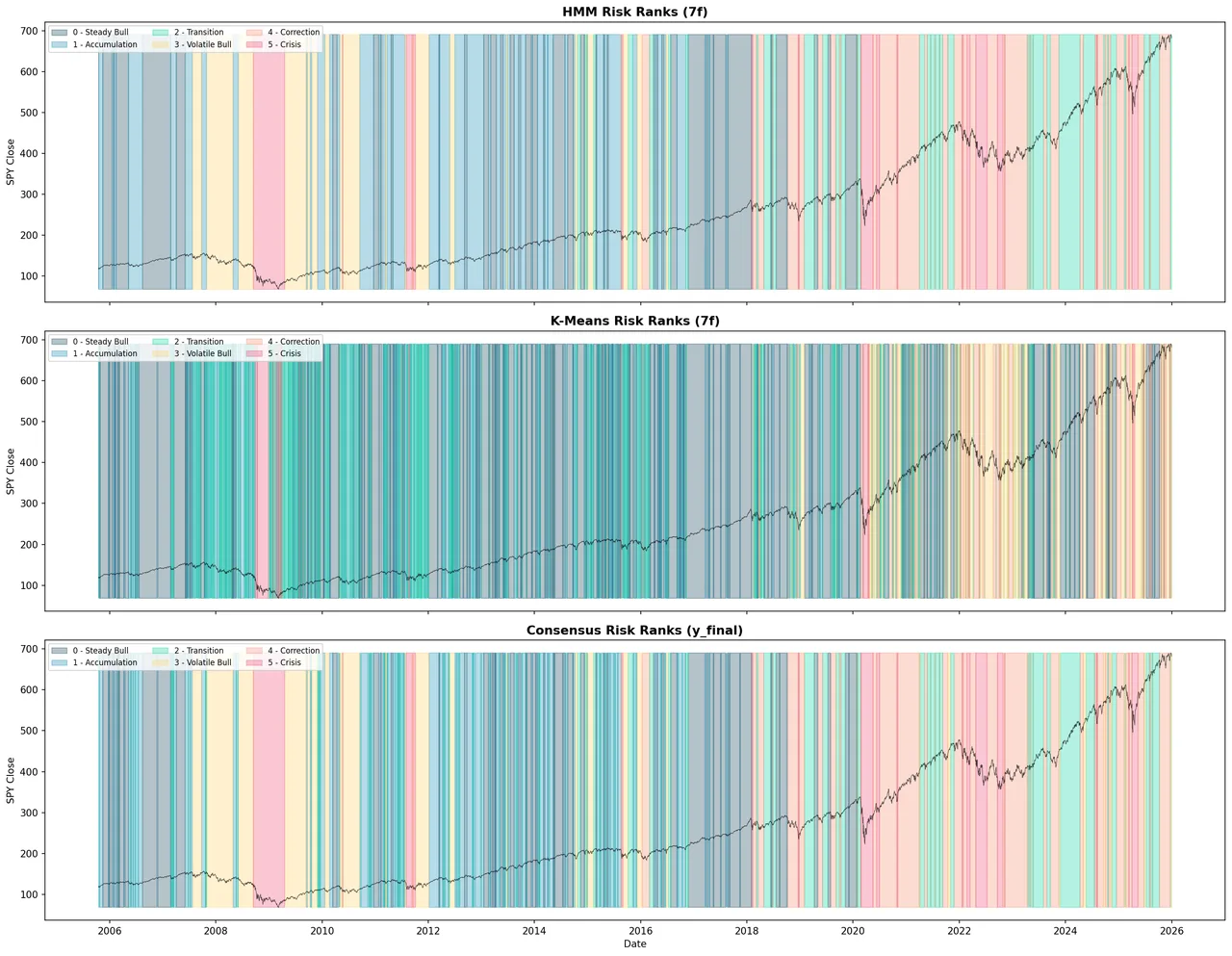
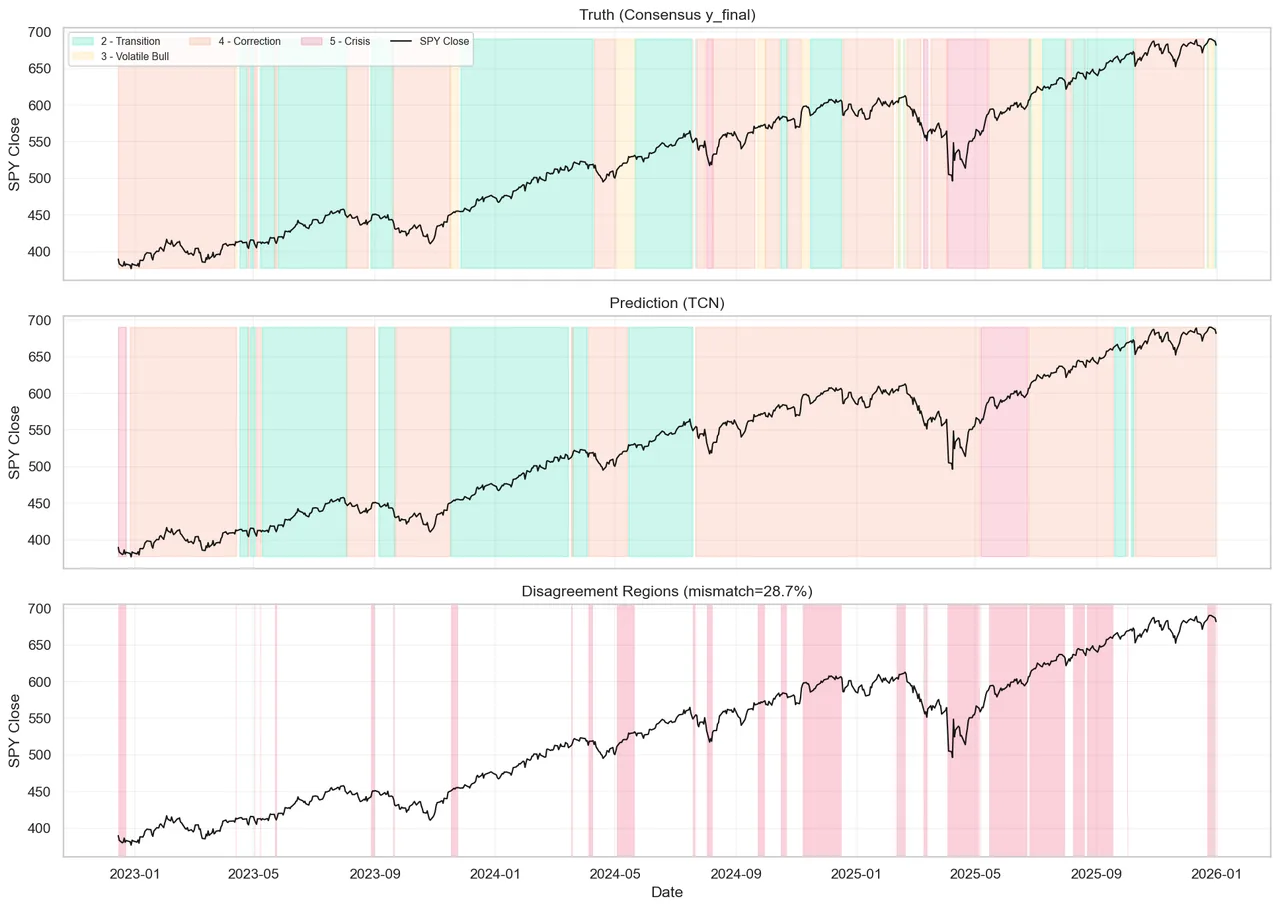
I trained a Temporal Convolutional Network to classify those labels as an intermediate step. The forecasting experiments used the previous 60 trading days to predict the regime five days ahead and whether a change was coming. I compared TCNs with a small transformer against simply keeping the current regime.
The labels were still a limitation. The models were learning to predict categories we'd assigned with clustering and a rule for disagreements. Switching trading strategies remained the intended use; matching those labels wasn't enough to establish that it would work.